A camera rental business can turn expensive gear into repeat revenue, but buying a shelf full of cameras isn’t a business plan. The real work is choosing a clear customer, stocking equipment that gets booked, protecting every item, and keeping pickups and returns on schedule.
This guide explains how the model works, which niches are worth testing, how to calculate rental prices, and how to build the operation from the ground up. It also covers booking software, insurance, rental policies, marketing, and the numbers that show whether the business is working.
What Is a Camera Rental Business?
A camera rental business lets customers rent cameras, lenses, lighting, and other photography or video equipment for a set period instead of buying them. Customers often include photographers, filmmakers, content creators, and businesses that need equipment for specific projects.
The business typically follows one of two models: owned fleet, where the company owns and rents out its equipment, or marketplace, where a platform connects equipment owners with renters. Lensrentals and BorrowLenses are familiar examples of the owned-fleet model, while ShareGrid is known for its peer-to-peer marketplace.
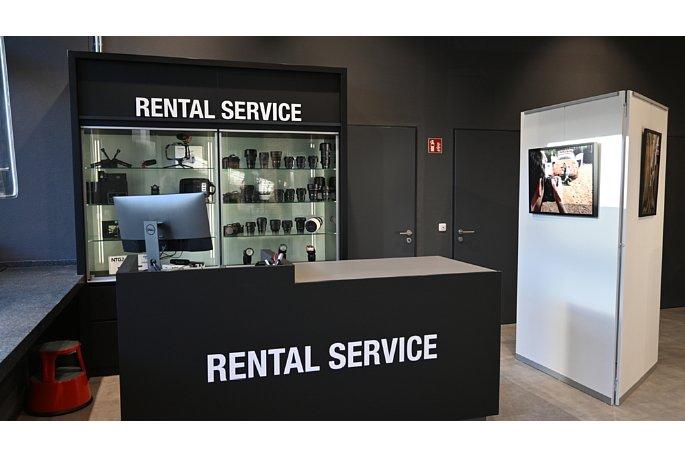
You can run this business in several ways. Customers may pick up the gear from a local shop, or the business can deliver or ship it to them. Some companies own all their equipment. Others create a marketplace where camera owners rent their gear to other people. Larger rental companies may also provide complete kits for photographers, agencies, and film crews.
Camera rental is one type of equipment rental business, but camera gear needs more care than many other products. It is expensive, easy to damage, and can become outdated quickly. Customers also need equipment that works well together. A camera body may need the right lenses, batteries, memory cards, cables, lights, and audio gear before it is ready to use.
6 Camera and Equipment Rental Business Ideas
The best niche isn’t the one with the most products. It is the one with a clear customer, a repeat use case, and enough local demand to keep a small inventory moving.
1. Beginner creator kits
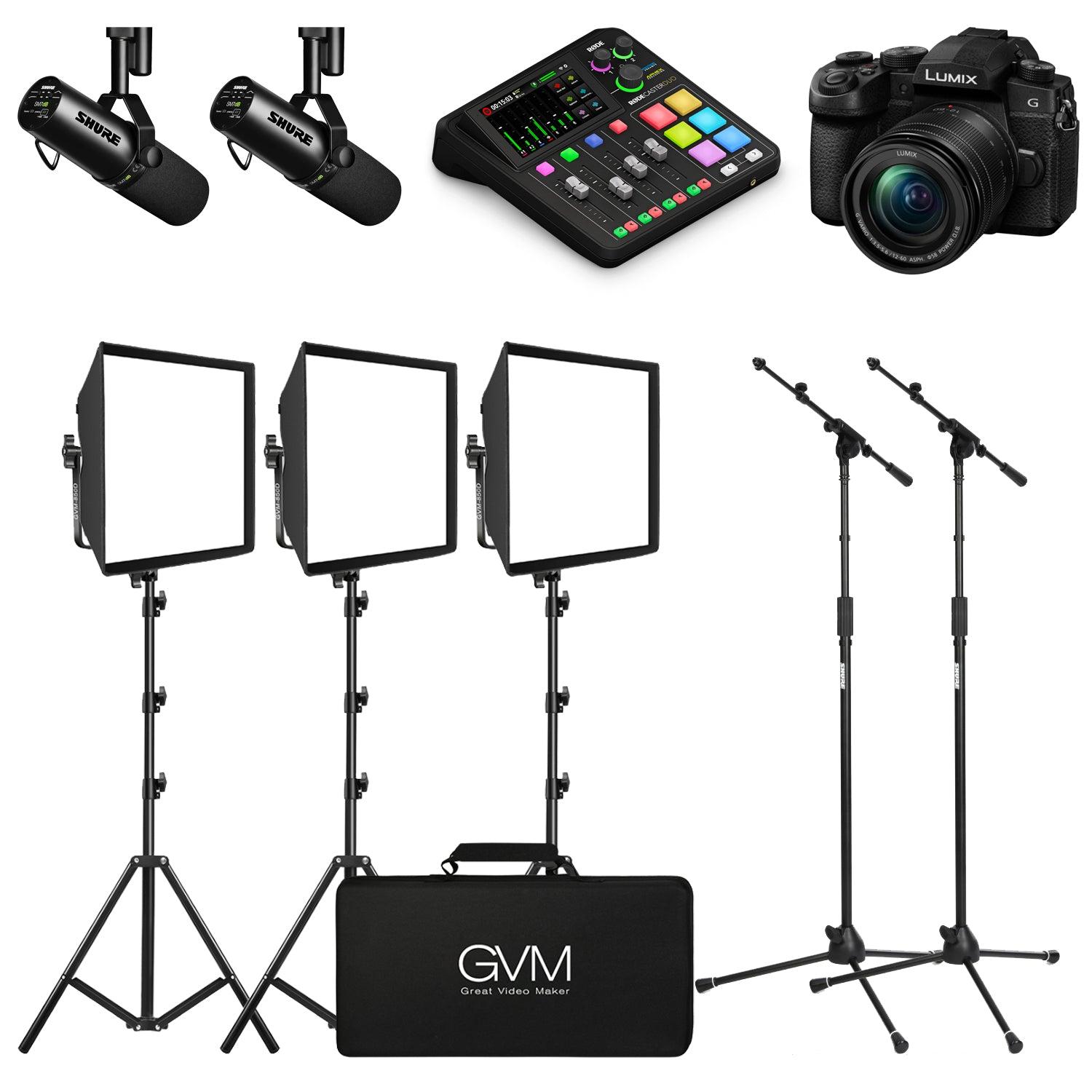
Build simple packages for new creators, small brands, and social media teams. A kit might include a mirrorless camera, one flexible lens, a tripod, a wireless microphone, a light, spare batteries, and a memory card. Customers pay for a complete setup instead of trying to match separate parts.
2. Wedding and event kits
Wedding photographers and videographers often need backup bodies, fast lenses, stabilizers, lights, and audio equipment for fixed dates. Reliability matters more than having a huge catalog. Early pickup, backup options, and fast help can become strong selling points.
3. Cinema and commercial production gear
This niche serves film crews, agencies, and production companies that need cinema cameras, specialty lenses, monitors, wireless video, audio recorders, and lighting. Order values can be higher, but so are insurance needs, technical support, and the cost of downtime.
4. Lens-only rental
Lenses can be a focused way to enter the market because many customers already own a camera body. Start with one mount and stock lenses for clear jobs, such as portraits, sports, wildlife, events, or real estate.
5. Podcast and livestream kits
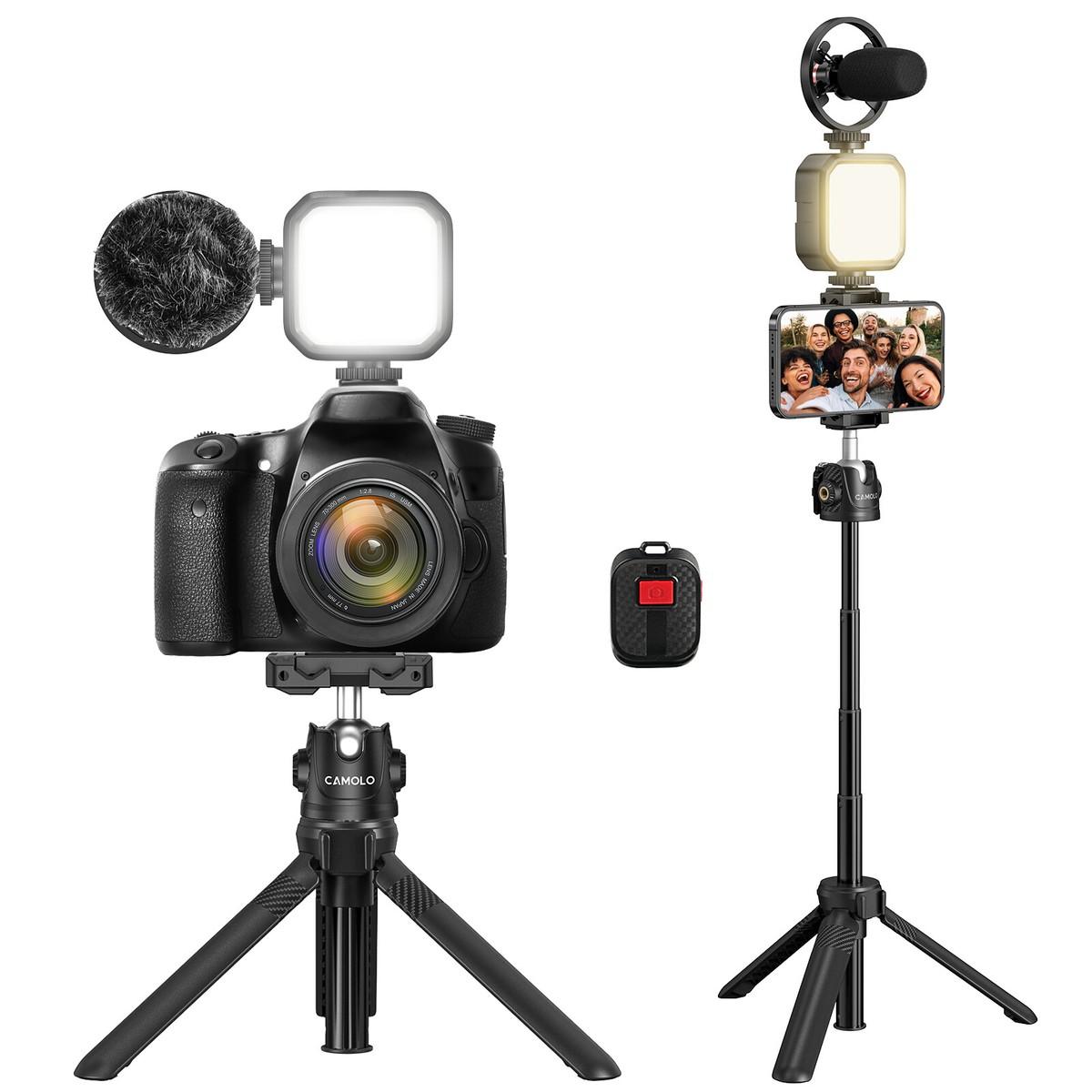
Local companies, schools, venues, and event organizers may need cameras, microphones, lights, capture cards, and switchers for short projects. These kits work best when every cable is labeled and the setup includes a clear guide.
6. Travel and outdoor photography kits
Travelers may want telephoto lenses, action cameras, drones, waterproof cases, or compact tripods without buying gear for one trip. This is one of the more location-dependent equipment rental business ideas, so check tourism patterns, local rules, and seasonal demand before investing.
Is a Camera Rental Business Profitable?
It can be profitable, but revenue alone gives an incomplete picture. An item that earns $3,000 in bookings may still perform poorly after repairs, insurance, cleaning, shipping, payment fees, storage, and lost rental days are counted.
Start with contribution margin:
| Rental revenue − booking-specific costs = contribution margin |
Then estimate the minimum daily rate needed to recover the asset:
| (Purchase cost − expected resale value + ownership costs) ÷ target paid rental days |
Suppose a kit costs $3,000, should resell for $900, and is expected to incur $900 in insurance, maintenance, and storage during its rental life. If the target is 60 paid rental days, it needs to contribute about $50 per paid day before profit: ($3,000 − $900 + $900) ÷ 60.
That isn’t the final customer price. Add per-booking labor, cleaning, payment fees, delivery risk, and a profit margin. Then compare the result with local competitors. If the market won’t support the price, change the kit, buy used equipment, improve utilization, or reject the purchase.
How to Start a Camera Rental Business in 9 Steps
Starting a camera rental business takes more than buying popular gear. You need to confirm demand, choose a rental model, plan your costs, protect the equipment, and build a smooth booking process. These nine steps will help you set up the business in the right order and avoid costly mistakes.
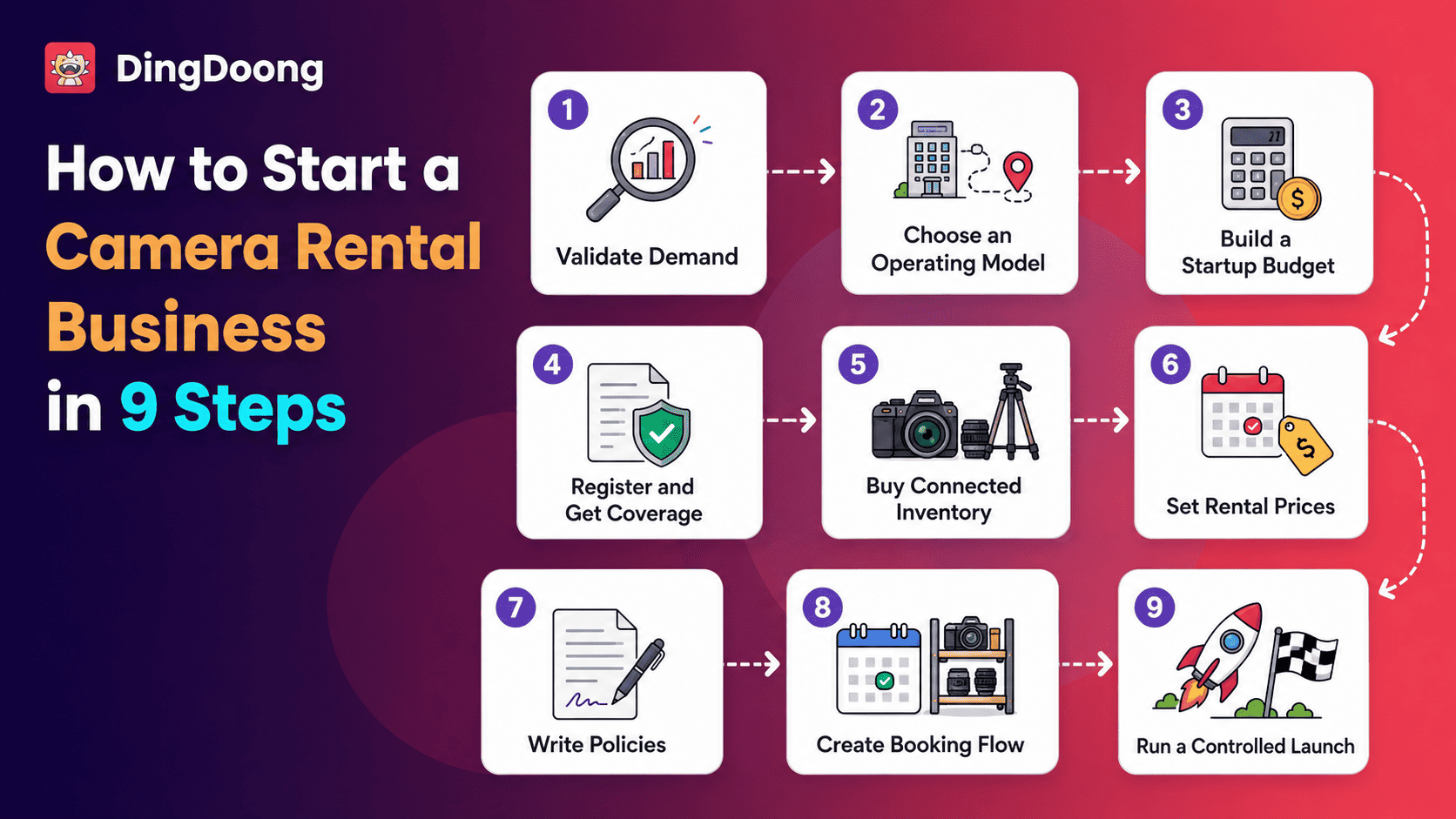
Step 1: Validate demand before buying equipment
List the customer groups within a practical service area: creators, wedding teams, students, agencies, production crews, real estate photographers, schools, or tourists. Speak with people in the strongest group and ask what they rent, how often, from whom, and what causes problems.
Next, review local rental shops and peer-to-peer listings. Record their products, prices, rental periods, deposits, pickup options, sold-out dates, and weak customer experience. Validation should end with a narrow statement, such as “weekend video kits for small wedding teams within 25 miles,” not “gear for everyone.”
Step 2: Choose one operating model
Local pickup keeps shipping risk low and makes handover checks easier. Delivery adds convenience but requires routing, fees, and clear responsibility during transport. Nationwide shipping expands the market, yet packaging, carrier delays, and theft become larger concerns.
A marketplace model reduces the need to own inventory, but it introduces owner screening, commissions, claims, and trust problems. Most first-time operators will find a small owned fleet easier to control.
Step 3: Build a realistic startup budget
Separate one-time costs from monthly costs. One-time items may include cameras, lenses, cases, shelving, a testing station, branding, contracts, and store setup. Ongoing costs include insurance, rent or storage, software, payment fees, cleaning supplies, repairs, shipping materials, marketing, and labor.
Keep cash aside for damage and downtime. A fully booked camera that fails before a weekend job can force the business to pay for an outside replacement or refund the order. Startup capital shouldn’t all be locked inside inventory.
Create three versions of the budget before spending. The minimum version contains only the equipment and tools required to take the first booking. The operating version adds three to six months of fixed costs and a repair reserve. The expansion version lists products to buy only after demand is proven. This makes optional purchases easy to delay and shows how much revenue the first fleet must produce before the next order is safe.
Keep personal spending out of the calculation. A laptop, camera, or vehicle that already belongs to the owner still has a business cost when it is tied up in rental work. Record its fair starting value, business-use share, and expected replacement date so the plan doesn’t hide part of the investment.
Step 4: Register the business and arrange the right coverage
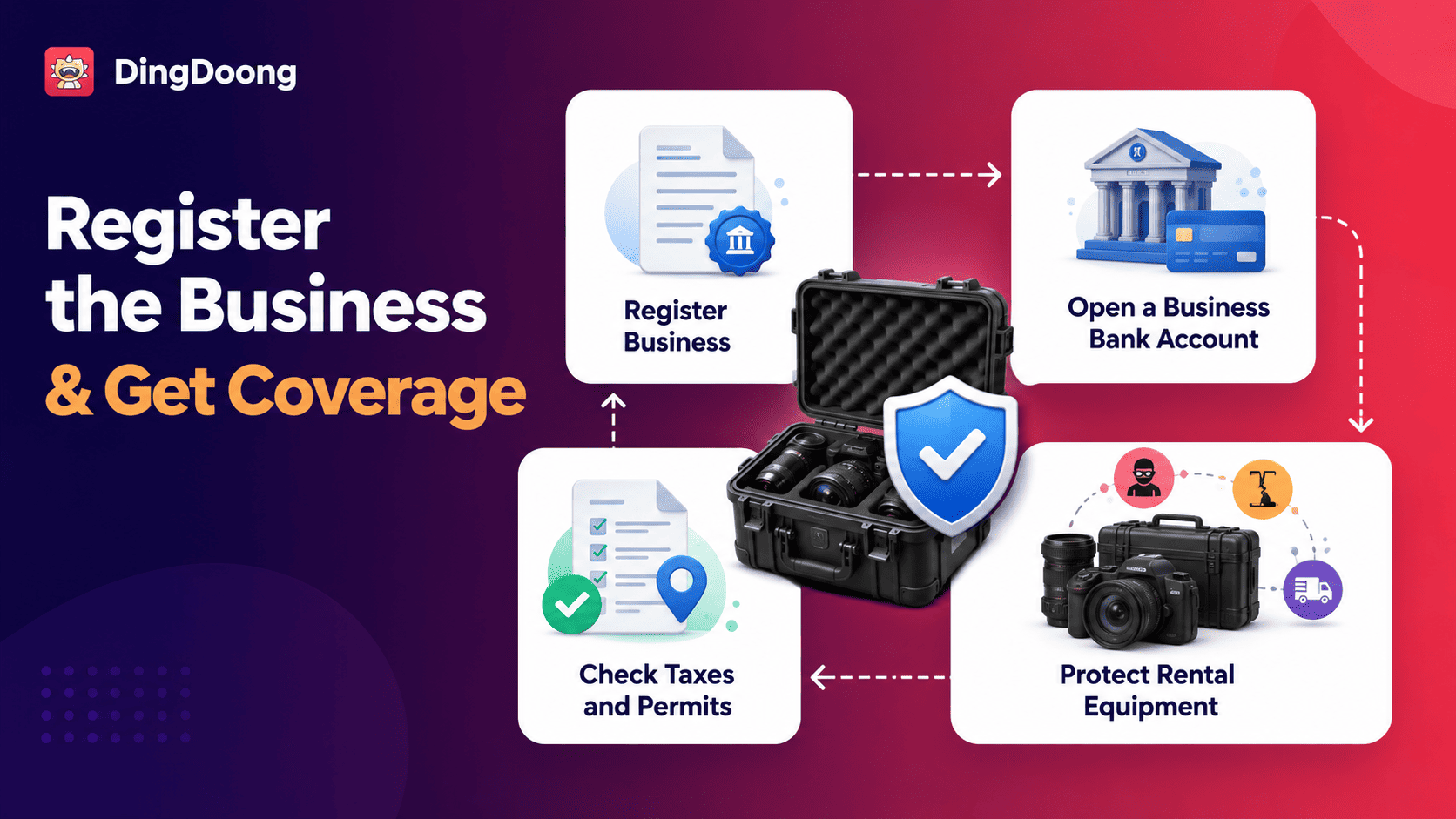
Choose a business structure, register the name, open a business bank account, and confirm tax, permit, and zoning requirements. The U.S. Small Business Administration notes that licenses, insurance costs, taxes, and local rules vary by activity and location.
Ask an insurance professional about business property, general liability, equipment in transit, theft, damage while rented out, and the replacement value of high-cost orders. A standard personal camera or homeowner policy may not cover commercial rental activity. Get legal and tax advice for the area where the business operates.
Step 5: Buy a small, connected inventory
Start with one customer workflow and one main camera system. A disconnected catalog creates hidden gaps: a body without enough batteries, a lens without the right filter, or a recorder without the required cable.
Each kit should be ready for a real job. Record the serial number, purchase date, cost, warranty, condition, included accessories, replacement value, and maintenance history of every asset. Label small parts because missing chargers and adapters can quietly erase margin.
Plan a backup path for the parts that can stop an entire job. That might mean an extra camera body, spare batteries, duplicated cables, or a relationship with another rental house. A backup doesn’t need to mirror the whole fleet; it should cover the failures customers cannot work around.
Used gear can reduce the recovery target, but inspect it carefully and confirm that service and replacement parts remain available. Avoid buying products only because they are personally interesting. Booking evidence should decide what comes next.
Step 6: Set daily, weekend, and weekly prices
Calculate the break-even level for every item, then compare it with local prices. Use duration packages that match the customer’s work. A wedding team may value a Friday-to-Monday package, while a commercial crew may want a three-day or seven-day rate.
Longer rentals can carry a lower daily price because one handover produces more paid days. Still, the discount must cover the chance that the item cannot serve another customer. Price delivery, rush preparation, cleaning, and special support separately when they create real costs.
Bundles can improve both value and usability. A camera kit with a lens, two batteries, media, tripod, and microphone is easier to choose than six separate listings. Add-ons should complement the job, not bury customers in options.
Step 7: Write the rental agreement and operating policies
The agreement should define the equipment, rental start and end, payment, deposit or authorization, approved use, pickup or shipping, cancellation, extensions, late returns, damage, cleaning, loss, theft, and replacement responsibility. It should also explain how disputes and claims are handled.
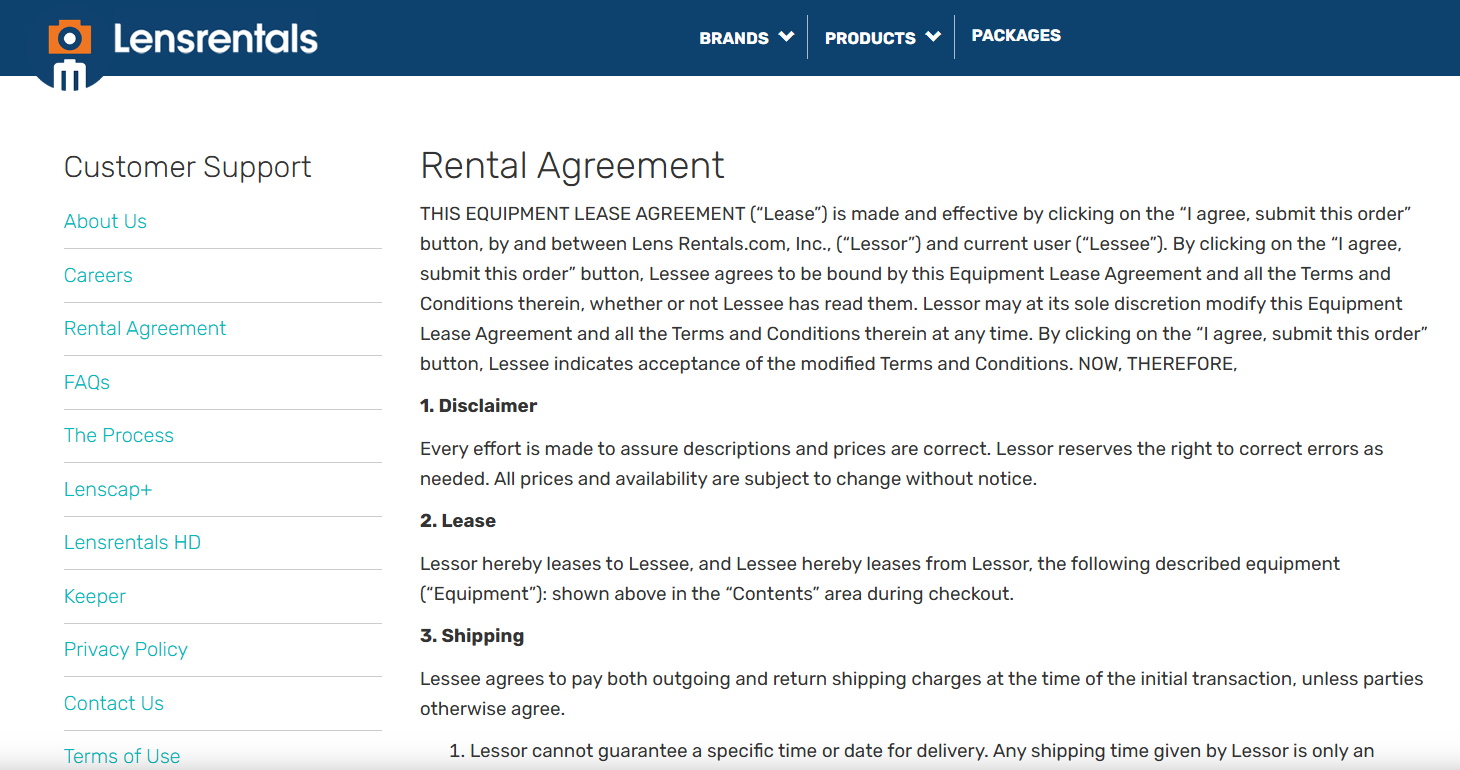
Large rental companies treat these details as operational controls. For example, the public Lensrentals rental agreement defines the rental term, advance payment, late returns, equipment condition, damage, cleaning, loss, and replacement liability. Its exact rules aren’t a template for every business, but they show what vague policies often miss.
Have a qualified local attorney review the final agreement. Make the terms visible before payment and require the renter to accept them.
Step 8: Create the booking and inventory flow
Every product page should show what is included, compatibility, condition, replacement value, available dates, pickup or delivery choices, deposit rules, and the return deadline. Customers should not need to message the business to find out whether an item is free.
The booking system must block unavailable dates, limit quantity, leave time for inspection, and keep the order connected to the exact asset being prepared. Test overlapping bookings, same-day requests, extensions, cancellations, late returns, and damaged equipment before launch.
Step 9: Run a controlled launch
Launch with a limited service area, a small customer group, and a manageable number of kits. Process the first bookings manually enough to see where customers hesitate and where staff make mistakes.
After each return, record missing parts, preparation time, questions, damage, and actual margin. Fix the workflow before adding more gear. A larger fleet will multiply weak processes as quickly as it multiplies bookings.
Build a Checkout and Return Process That Protects Every Item
Use the same checklist for every handover. Confirm the renter’s identity, agreement, payment status, dates, and contact details. Lay out every item, test key functions, count accessories, photograph existing wear, and have both sides acknowledge the condition.
On return, repeat the count and inspection before releasing a deposit or closing the booking. Check the sensor, lens glass, ports, mounts, screens, batteries, media, cables, and cases. Record the actual return time and move damaged items out of available inventory until they pass inspection.
Create a buffer between bookings for charging, cleaning, testing, repair, and repacking. A one-hour gap may work for a simple tripod, while a cinema kit may need much longer.
Track four numbers for each item:
- Paid utilization: paid rental days divided by available rental days
- Contribution margin: revenue minus booking-specific costs
- Downtime: days blocked for repair, cleaning, or missing parts
- Payback progress: cumulative contribution compared with the amount the item must recover
Sell or replace gear that has weak demand, rising repair costs, or poor compatibility with the rest of the fleet.
Stop Running Camera Bookings Through Messages and Spreadsheets
Running camera rentals through messages and a shared calendar may work for the first few orders. It becomes risky when several cameras are booked at the same time. If one return is not updated, the same camera may be promised to another customer before it has been checked, charged, and prepared again.
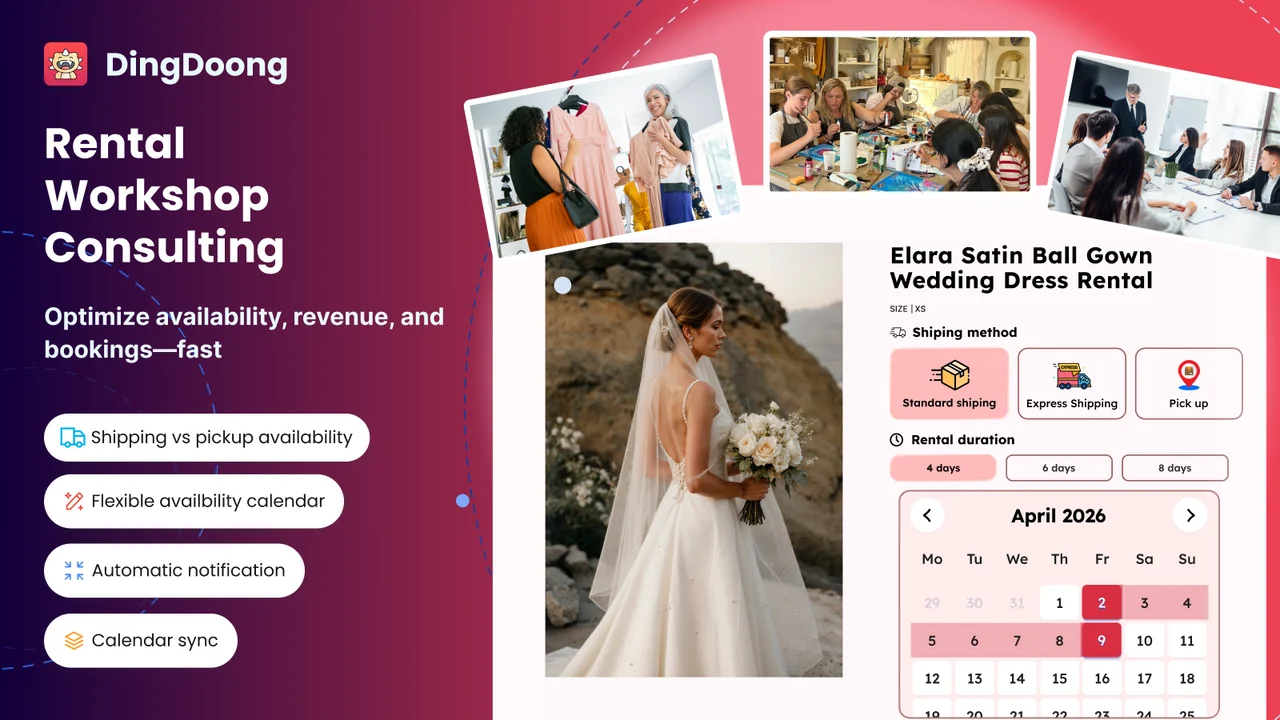
DingDoong Rental Booking Appointment helps manage the parts of this process that are easy to miss. When a camera is rented for several days, the merchant can block those dates from new bookings. Extra time can also be added after each rental for cleaning the gear, charging batteries, checking the sensor, and replacing missing accessories.
Customers can choose an available rental period and select pickup or shipping from the Shopify product page. DingDoong can send booking emails and keep the booking details together, so staff don’t have to rebuild the schedule from messages.
When the camera comes back, staff can record the actual return time and see whether it was on time or late. This helps the business track returns consistently across bookings, but it does not replace insurance, renter checks, a rental agreement, or a physical inspection.
Best Practices to Market a Camera Rental Business
Make local searches specific
Create pages around real intent, such as cinema camera rental in the city, weekend wedding video kits, podcast equipment rental, or telephoto lens rental. Set up a complete Google Business Profile if customers can visit or receive local service. Show the service area, opening hours, pickup rules, and real product photos.
Build partnerships around repeat work
Connect with studios, wedding planners, production companies, colleges, coworking spaces, venues, agencies, and creator communities. A partner doesn’t need a large audience to matter. A small production team that books twice a month can be more valuable than a broad social following.
Teach customers how to choose

Publish short guides that answer buying-stage questions: which lens fits an indoor event, what a livestream kit includes, or how much battery time a package provides. Clear compatibility tables and setup videos reduce support work and help less experienced renters book with confidence.
Bring good renters back
Save kit preferences, make rebooking easy, and offer useful benefits for repeat customers, such as faster approval, priority access, or account pricing. Don’t discount every order. Reliable availability, clean equipment, and a fast handover may matter more to working professionals than the lowest rate.
Camera Rental Business FAQs
How much does it cost to start a camera rental business?
The cost depends on how small the business starts. A home-based rental service may only need a few cameras or lenses, while a cinema rental company will need more gear, storage, staff, delivery, and stronger insurance. Price the first complete kits, then add store setup, insurance, and enough cash for repairs.
Can an existing photographer rent out personal gear?
Yes. However, the photographer should separate personal shoots from rental bookings. Add each item to the booking calendar, record its serial number and condition, and confirm that the insurance covers commercial rentals. Never accept a rental for gear that is already needed for a client shoot.
How should camera rental prices be calculated?
Start with the full cost of owning the gear, including the purchase price, insurance, maintenance, storage, payment fees, and delivery. Estimate how many paid rental days it will have, then calculate how much each day must earn to cover those costs and make a profit. Compare the result with local prices before setting the final rate.
Should a camera rental business charge a security deposit?
A security deposit is useful for valuable camera gear, but it should not be the only protection. The business still needs insurance, renter checks, and a clear rental agreement. Set the deposit based on the equipment value, local laws, and how the business handles damage, loss, and refunds.
What equipment should be purchased first?
Start with one complete kit that solves a common customer need. This could be a mirrorless video kit, two popular lenses, or a livestream setup. Make sure every part works together, then buy more gear only when customer requests and booking data show real demand.
Final Words
A strong camera rental business doesn’t begin with the biggest equipment list. It begins with one customer, one dependable kit, clear pricing, firm protection, and a booking process that works from reservation to return. Track utilization and margin by item, reinvest in products customers already request, and remove gear that stays idle. That is how a small rental offer becomes a controlled, scalable business.
Try DingDoong Free
Add a date picker to your Shopify checkout today — no developer needed.
Start free trial →