Picking between Shopify POS and Square can be tough. Both help businesses sell products and accept payments, but they work in different ways. This guide will help you understand which one might work better for your store, cafe, or service business.
What is Shopify POS?
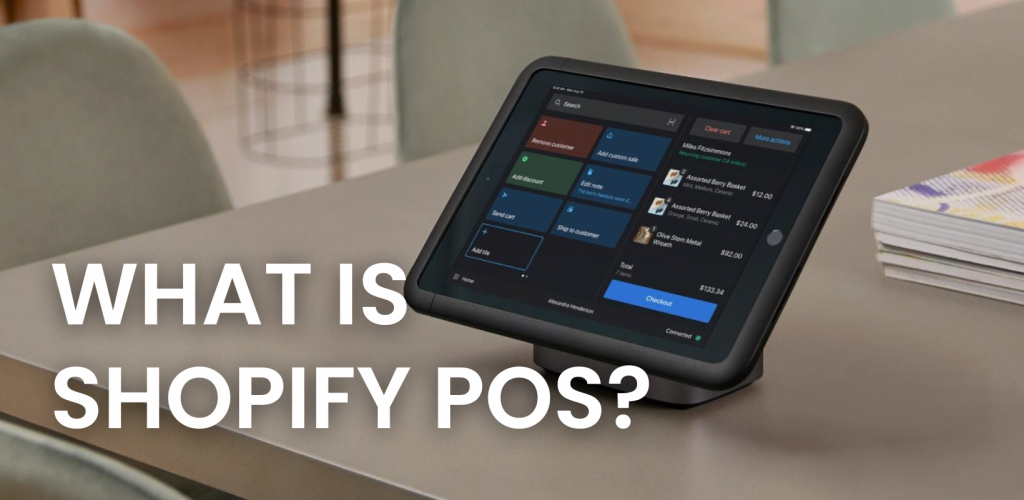
Shopify began as a website builder for online stores. Later, they added tools to help businesses sell in person, too. This became Shopify POS (Point of Sale).
Shopify POS helps your business companion that seamlessly tracks every sale, updates inventory instantly, and keeps your customer data perfectly synchronized. It’s not just another payment system; it’s a comprehensive retail management platform designed to make your business run smoother than ever.
What Is Square POS?

Square started differently. They first made a small white card reader that plugged into smartphones. This lets small businesses accept credit cards easily. Over time, they built a complete system around this, adding more features for different types of businesses.
Today, both systems let you sell products both in-person and online. But their different backgrounds shape how they work and which businesses they serve best.
Shopify POS vs Square: Which Is Cheaper in 2026?
Money matters when choosing a system. Here’s how the costs break down: Here’s a clear comparison table based on the cost breakdown between Square and Shopify:
| Feature | Square | Shopify |
| Monthly Cost (Base Plan) | $0 (Free to start) | Starts at $39/month (Basic Shopify) |
| Hardware Costs | Card Reader: FREE (first one) → $49-$59 (additional) Terminal: $299 (all-in-one device) Full Register: $799 Stand: $169 | Card Reader: $49 POS Go: $399 (mobile terminal) Full Register Setup: $1,000+ Retail Stand: $149-$249 |
| Transaction Fees | 2.6% + 10¢ per in-person sale | 2.6% + 10¢ per in-person sale (Basic plan) |
| Card Reader Cost | The first reader is free | Starts at $49 |
| Advanced Features | Square for Retail Plus: $89/month per store | POS Pro: $89/month per location |
| Online Store | Not included with a free plan | Full online store included |
| Scalability | Great for new/small businesses with limited cash flow | Better suited for growing businesses with higher volume |
| Long-Term Savings | Pay-as-you-go model — ideal if you’re just starting out | Higher-tier plans (e.g., $399/month) reduce transaction fees (2.4%) |
| Best For | Businesses just starting or with tight cash flow | Businesses selling online or handling high sales volume |
The big difference? Square lets you start with zero monthly costs. Shopify always has a monthly fee, but it includes a full online store at that price. That said, you can actually try Shopify for just $1/month for your first 3 months through our referral link right here!

If your business is just starting or has tight cash flow, Square’s free approach is hard to beat. You only pay when you actually make money. For bigger businesses or those selling a lot online, Shopify’s monthly fee might be worth it for the extra features.
Some businesses find that Shopify saves them money in the long run. Higher-tier Shopify plans (like Advanced at $399/month) offer lower transaction fees (down to 2.4% for in-person sales). If you process lots of payments, these savings can add up fast.
Shopify POS vs Square: Features Comparison
Both systems handle the basics: selling products, tracking inventory, and processing payments. But each has special strengths that might matter to your business. 
What Square POS Does Well
Square has earned its place as the go-to point-of-sale system for many small businesses. It removes the complexity that often comes with payment processing, making it accessible for everyone from weekend market vendors to established retail stores. Here’s why so many merchants choose Square for their business needs:
Easy setup: Square wins on simplicity. Download the app, connect a card reader, and you can start selling in minutes. There’s very little to configure.
Works without internet: Square has an excellent offline mode. If your internet goes down, you can still take payments. They’ll process automatically when your connection returns.
Special versions for different businesses: Square offers tailored systems for specific business types:
- Square for Restaurants: Has table layouts, meal coursing, and kitchen ticket features
- Square for Retail: Includes barcode tools, purchase orders, and detailed inventory
- Square Appointments: Built-in booking system with automatic customer reminders
Free basic online store: Square includes a simple but functional website builder at no extra cost. It’s basic but works well enough for small businesses.
Built-in extra services: Square offers several add-ons that work seamlessly with their main system:
- Customer loyalty programs
- Email marketing campaigns
- Gift cards
- Payroll processing. All these extras cost additional fees, but they’re well-integrated.
What Shopify POS Does Well
Shopify POS takes retail management to another level by bridging the gap between physical and digital selling. For merchants who want a truly integrated approach to commerce, Shopify offers powerful tools that create a seamless customer experience across all touchpoints. Here’s where Shopify POS truly excels:
- Connects online and in-store seamlessly: Shopify’s biggest strength is how it unifies your sales channels. Sell a product in your physical store, and your online inventory updates instantly. Customer information, order history, and product data stay in sync across all sales channels.
- Powerful online store: Since Shopify started as an e-commerce platform, its online features are excellent. You get professional-looking website templates, blog capabilities, and powerful marketing tools.
- Huge app selection: Shopify’s App Store offers over 8,000 add-ons and integrations. If you need a special feature, there’s probably an app for it. These cover everything from advanced shipping tools to marketing automation.
- Better for growth: Shopify scales well as businesses grow. It handles multiple locations, large inventories, and international selling better than Square. Many big brands use Shopify because it can grow with them.
- More detailed reports: Shopify provides deeper analytics and business insights, especially on higher-tier plans. These reports help with inventory planning, sales strategies, and understanding customer behavior.
I’ll rewrite this content to sound completely human-written, engaging, and natural while keeping it simple and avoiding personal additions.
Shopify POS vs Square: Support Comparison
Let’s face it – even the best systems have hiccups. When something goes wrong with your POS, getting quick help can mean the difference between a minor inconvenience and a day of lost sales. Here’s how support stacks up between these 2 platforms: Square offers several ways to get help when you need it:
- Phone support during business hours (Monday-Friday, 6 am-6 pm Pacific Time)
- Email support with response times that vary based on your question
- A comprehensive help center filled with guides and tutorials
- A community forum where other Square users share tips and solutions
Square’s support resources are solid, but they do have limitations. Their help center is well-organized and covers most common questions, making it easy to find answers to basic problems on your own.
The main drawback is their limited hours. If your card reader stops working during a busy Saturday rush, you’ll have to rely on self-help resources rather than speaking with a support agent. Some merchants also mention difficulties getting through to live support during peak times, especially for more complicated account issues.  Shopify takes a more comprehensive approach to customer support:
- Live chat and email support available 24 hours a day, 7 days a week
- Phone support through a callback system (you request a call instead of dialing directly)
- Extensive documentation covering all aspects of the platform
- Active community forums where users share experiences and solutions
- A marketplace of Shopify Experts you can hire for specialized help
Shopify consistently receives better ratings for support availability. Being able to reach a human at 3 AM when your online store has a glitch provides real peace of mind for business owners.
This difference in support quality makes sense from a business perspective. Since Shopify charges monthly subscription fees for all users, they can invest more in their support team compared to Square, which offers basic services for free.
Making Your Decision: Key Questions to Ask
When choosing between these systems, ask yourself:
- What’s my budget? If minimizing fixed costs is crucial, Square wins easily.
- How important is online selling? If your website will be a major sales channel, Shopify offers much stronger e-commerce tools.
- What’s my technical comfort level? If you want the absolute simplest solution, Square requires less setup and technical knowledge.
- What type of business do I run? Restaurants, appointment-based services, and retail each have different needs. Square’s specialized versions might be perfect for certain businesses.
- Am I planning to grow? If you expect significant expansion in the next year or two, Shopify’s scalable platform might save you from having to switch systems later.
- Do I need to sell offline? If your business operates in areas with poor internet (outdoor markets, rural areas, events), Square’s better offline capabilities could be crucial.
- How important are detailed reports? If you make decisions based heavily on data, Shopify provides more in-depth analytics, especially on higher-tier plans.
Shopify POS vs Square FAQs
Is Square or Shopify better?
The answer really depends on how you run your business:
Square works best for businesses that mainly sell in person. It offers a free POS system, making it perfect for small shops, cafés, and service providers who don’t want to pay monthly fees. Square’s main strength is how simple it is to use for face-to-face sales.
Shopify shines when it comes to online selling. If your business focuses on e-commerce, Shopify provides better tools for building and managing an online store. Their templates look more professional, and they offer more advanced features for managing inventory and marketing. While Shopify also has a good POS system, its real strength is creating a seamless experience between your online store and physical location.
Square payments vs Shopify payments, which one is better?
Both payment systems are reliable, but they have different fee structures that might work better for different businesses:
Square Payments keeps things simple with a flat rate of 2.6% + 10¢ per transaction for in-person sales. There are no monthly fees or contracts to worry about. This straightforward pricing makes it easy to predict your costs.
Shopify Payments charges 2.9% + 30¢ per transaction for online sales, with lower rates if you pay for more expensive monthly plans. The big advantage of Shopify Payments is that it eliminates the extra transaction fees Shopify normally charges when you use other payment processors.
The better choice comes down to where you sell most. If you mainly sell in your physical store and want simple pricing, Square makes more sense. If you sell mostly online and process many transactions, Shopify Payments could save you money in the long run.
Is Shopify POS better than Square?
Neither system is universally better – it depends on your specific needs:
Shopify POS works best for businesses that sell both online and in physical stores. Its biggest strength is how perfectly it connects with your Shopify online store. Your inventory, customer information, and sales data stay synchronized across all sales channels. This makes it easier to provide a consistent experience whether customers shop online or in person.
Square POS excels for businesses focused on in-person sales. The system is free to use (you just pay for transactions), has user-friendly hardware options, and is known for being extremely easy to learn. Small shops, restaurants, and service businesses often prefer Square because it’s straightforward and cost-effective.
Choose Shopify POS if selling online is a major part of your business. Pick Square POS if you mainly sell in person and want the simplest, most affordable option.
Can I use Square with Shopify POS?
No, you can’t directly integrate Square with Shopify POS. These are competing systems that each handle both payment processing and point-of-sale functions. Trying to use them together would create duplicate systems and likely cause confusion with inventory tracking and reporting.
Most businesses choose either Square or Shopify to handle both their payment processing and POS needs. This creates a more streamlined operation with fewer technical complications. It’s best to evaluate which system better matches your business model and stick with that one platform.
Can Shopify be used as a POS system?
Yes, Shopify definitely works as a POS system. Their point-of-sale solution lets you sell products in person, manage inventory, and process payments. What makes Shopify POS special is how well it connects with your online Shopify store. Key features include:
- Inventory that updates automatically across online and in-store sales
- Customer records that work across all sales channels
- Support for various payment types, including credit cards, debit cards, and mobile payments
- Sales reports that help you understand how your business is performing
Shopify offers two versions of their POS system:
- POS Lite: Included with all Shopify plans at no extra cost. Works well for basic in-person selling needs.
- POS Pro: Available for an additional monthly fee. Includes advanced features like staff management, detailed inventory tools, and unlimited registers.
The Bottom Line: Which System Wins?
There’s no clear winner between Shopify POS and Square. Your best choice depends on what your business actually needs. Both platforms keep improving – Square is getting better online while Shopify strengthens its in-store capabilities. This competition means better options for you, the business owner. Remember that your needs might change as you grow. Fortunately, both systems make it relatively easy to switch if needed. Choose what helps your business now while allowing room for future growth!
Try DingDoong Free
Add a date picker to your Shopify checkout today — no developer needed.
Start free trial →
![12 Rental Dress Business Ideas [2026 Trends Updated]](https://dingdoong.io/wp-content/uploads/2026/09/rental-dress-business-ideas.png)